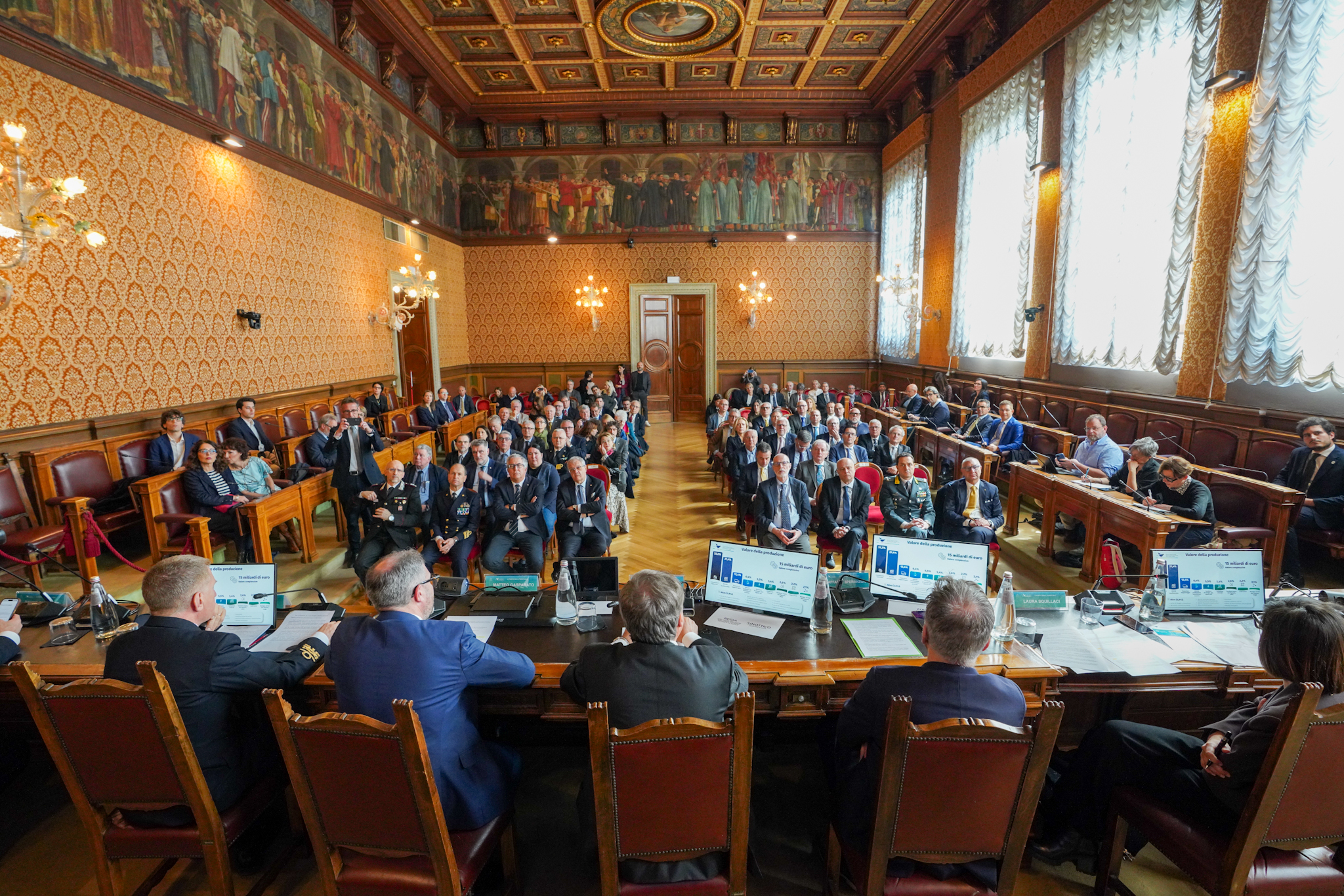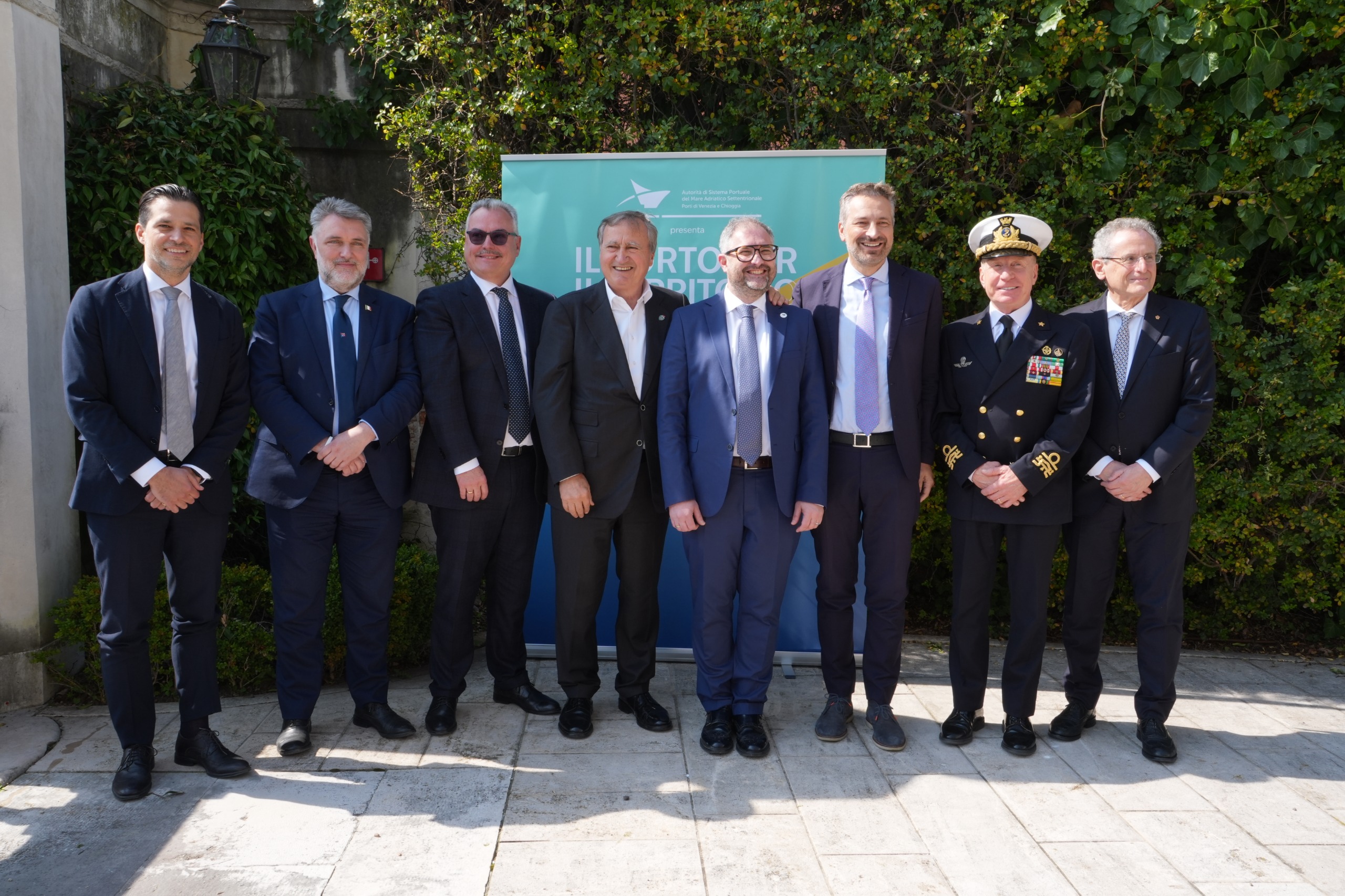

25 March 2026 – Venice, Palazzo Ca’ Corner. On Venice’s anniversary, the North Adriatic Sea Port Authority presents the results of the study “Business Activities in Venice and Chioggia”, carried out by the Centro Studi Sintesi of CGIA Mestre, providing a precise, validated and up-to-date snapshot of the port system and its economic, employment and territorial impact.
The port system of Venice and Chioggia today stands as a complex and integrated reality, covering 2,500 hectares, with 22 kilometres of quays, 65 kilometres of railway network and 40 kilometres of road network, for a total infrastructure value of €6.4 billion. It is a system that goes beyond the traditional concept of a port area, positioning itself as a complex economic platform capable of combining large industrial areas, specialised supply chains and a strong port–city interaction.
The study highlights the presence of 1,442 active companies, spanning the full range of ATECO classification codes, thus reflecting a diversified and multi-purpose business fabric. This represents a key factor of resilience and adaptability in response to changes in the international economic landscape.
From an economic perspective, the system generates a value of production of approximately €15 billion, corresponding to 51% aggregate for the Municipality of Venice and 25% at provincial level. When accounting for direct, indirect and induced effects, the overall value reaches €44.2 billion, distributed as follows: 54.6% within the Venice metropolitan area, 14.5% across the rest of the Veneto Region and 30.9% at national level.
In terms of Gross Domestic Product, the contribution amounts to 6.5% of regional GDP (equal to €13 billion) and €19 billion at national scale.
The employment impact is particularly significant: the port system directly employs 26,898 people, while total employment — including the supply chain — involves 218,853 individuals, distributed across the metropolitan area (58%), the rest of Italy (28.2%) and the Veneto Region (13.8%). This confirms the role of the port as a central economic and social infrastructure for the territory, capable of generating employment, income and cohesion.
In 2025, despite geopolitical tensions and disruptions affecting global logistics chains, the Veneto port system recorded growth in traffic volumes, with 26.2 million tonnes of handled cargo (+5.1%), 533,000 TEUs (+11.2%), 3,235 vessels and 735,000 passengers (+4.7%). The breakdown by cargo type confirms the port’s multipurpose profile, with a balanced distribution between general cargo (41.7%), dry bulk (31.6%) and liquid bulk (26.7%).
Taken together, Venice and Chioggia outline a multifaceted port system, in which Porto Marghera retains a strong industrial and logistics character undergoing continuous evolution, while Chioggia reflects a close relationship with the urban fabric, integrating port, commercial, artisanal and fishing activities within a dynamic balance.
Alongside its economic dimension, the port system is engaged in a structured transition towards environmental sustainability. The 2026–2028 Three-Year Operational Plan includes measures aimed at reducing environmental impacts, improving energy efficiency and restoring lagoon ecosystems, including the morphological redevelopment project in the Malamocco area, with the creation of 66 hectares of salt marshes and 33.4 hectares of tidal flats.
At the same time, investments are underway in sustainable water resource management and in the electrification of quays, with completion scheduled by 2026.
Within this framework, the programme “The Port for the Territory” plays a key role, aimed at strengthening the relationship between the port and the community through cultural, educational and port-opening initiatives.
The programme is structured as a system-wide project, based on a network of institutional partnerships involving the Metropolitan City of Venice, the Municipality of Venice and VELA, with which joint initiatives related to the sea and the city are currently underway, as well as the Municipality of Chioggia, with which cooperation continues, also in connection with the new local office of the North Adriatic Sea Port Authority.
These partnerships are complemented by collaborations with nationally and internationally significant institutions, including the Biennale di Venezia, for the development of educational programmes and the use of port spaces for cultural initiatives; Ca’ Foscari University of Venice and IUAV University of Venice, for research, teaching and innovative projects aimed at younger generations; the Venice World Capital of Sustainability Foundation, for the development of initiatives related to infrastructure resilience and urban sustainability goals; the Procuratoria di San Marco, for cultural initiatives addressed to younger audiences; and the Authority for the Venice Lagoon, on strategic matters concerning the management and protection of the lagoon system.
This coordinated network of relationships confirms the role of the port as an open, integrated platform, fully embedded within the institutional and territorial system.
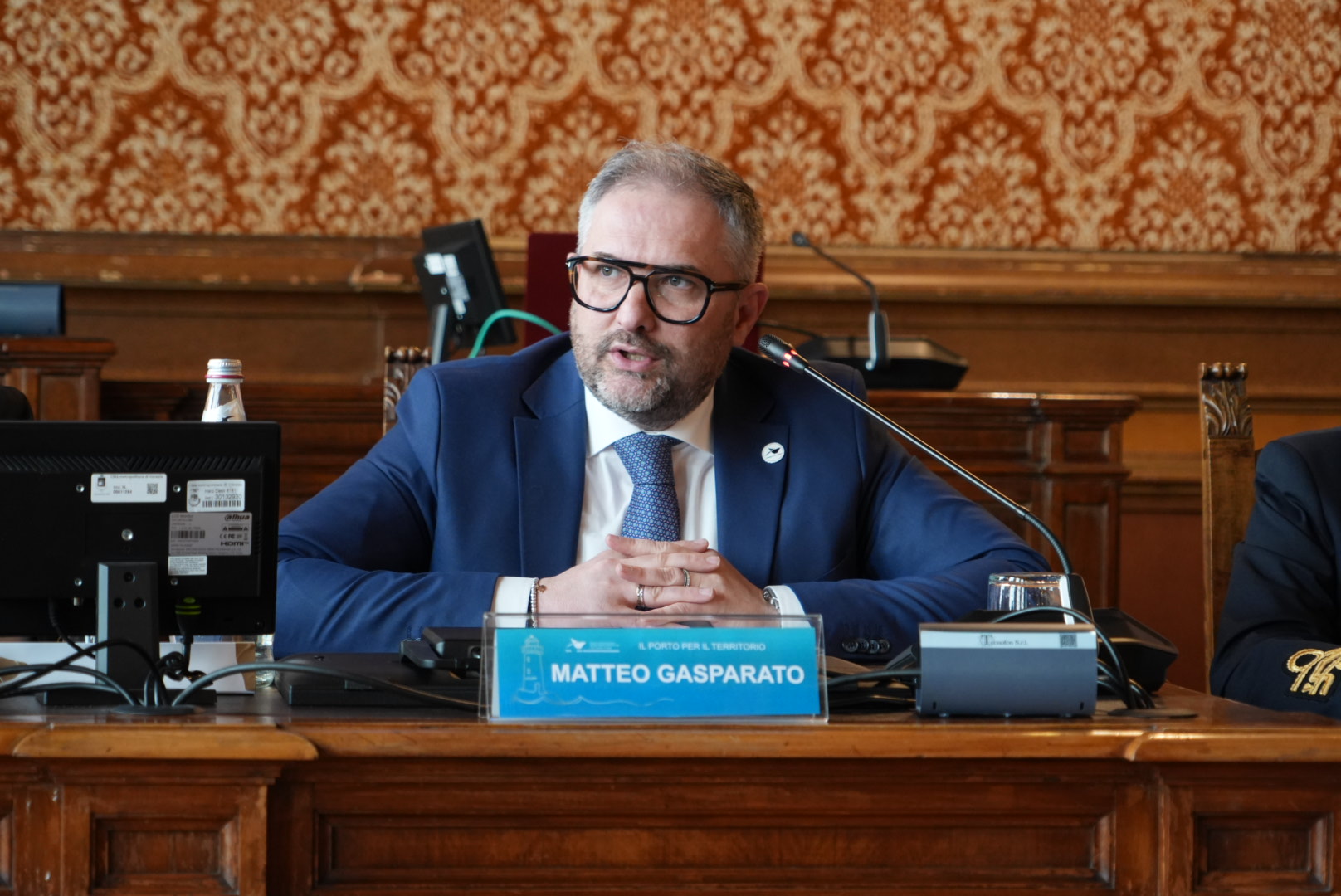
«Our objective is to reposition the port system and help reshape its perception, restoring its role as an economic, social and cultural resource for the territory» stated Matteo Gasparato, President of the North Adriatic Sea Port Authority. «The data clearly show that the port sector represents a concrete and structured alternative to the monoculture of tourism. Venice and Chioggia, together, form a modern, dynamic and resilient port system, capable of competing at both national and international level. Within this framework, we are also committed to rebuilding the identity of a territory whose cultural heritage is deeply rooted in its relationship with the sea, through the rebirth of a new brand capable of conveying to Italy and the wider world the value of the Ports of Venice: not only their economic impact and strategic role, but also their profound connection with the history, culture and identity of a unique place. The launch of the new brand will symbolise a new phase, marking the beginning of a new chapter for the port. This territory was born as a port and became a global reference point: today, supported by actual data, we demonstrate that it can continue to do so in a modern, sustainable and competitive way, alongside institutions and with a community that can once again take pride in it.».
The Venetian port system thus confirms its role as a strategic platform, capable of generating value on a broad scale and projecting itself beyond the local dimension, contributing to economic development, the ecological transition and the strengthening of territorial identity.