

Port of Venice

  1. HOME
  2. ››
  3. Port Offer
  4. ››
  5. The Ports
  6. ››
  7. Port of Venice
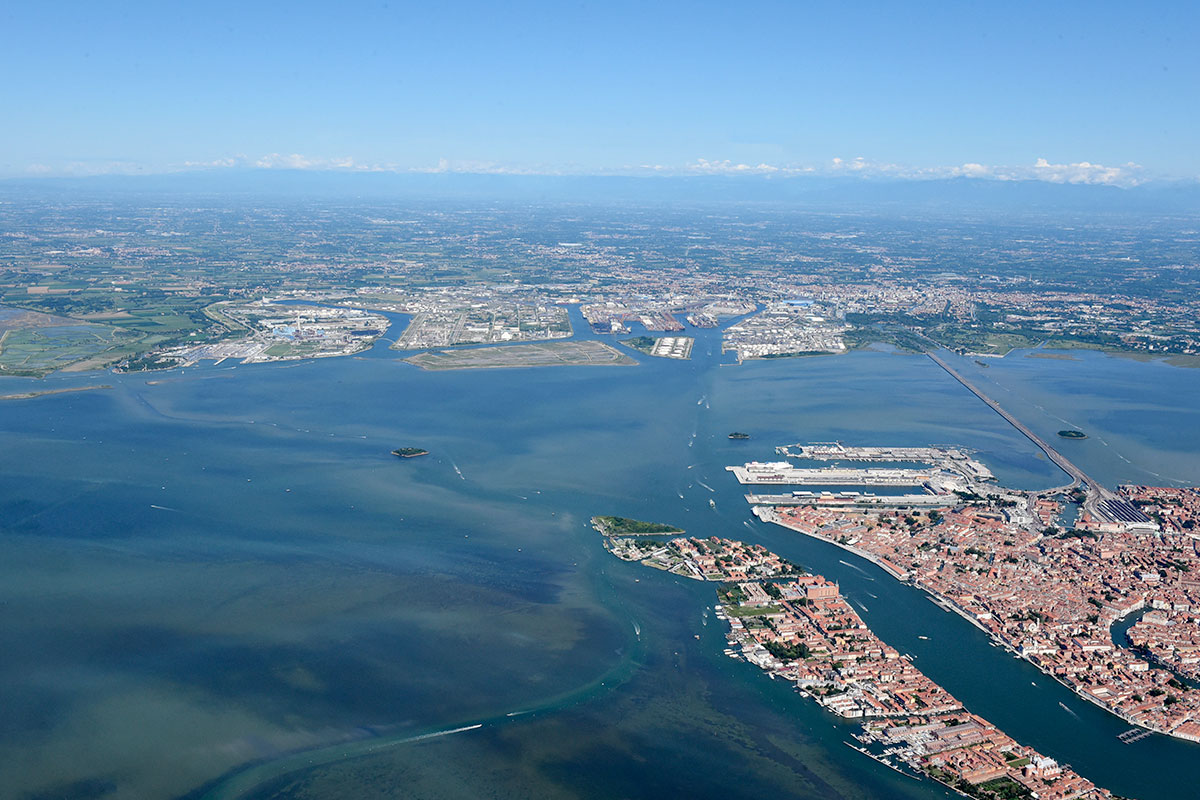
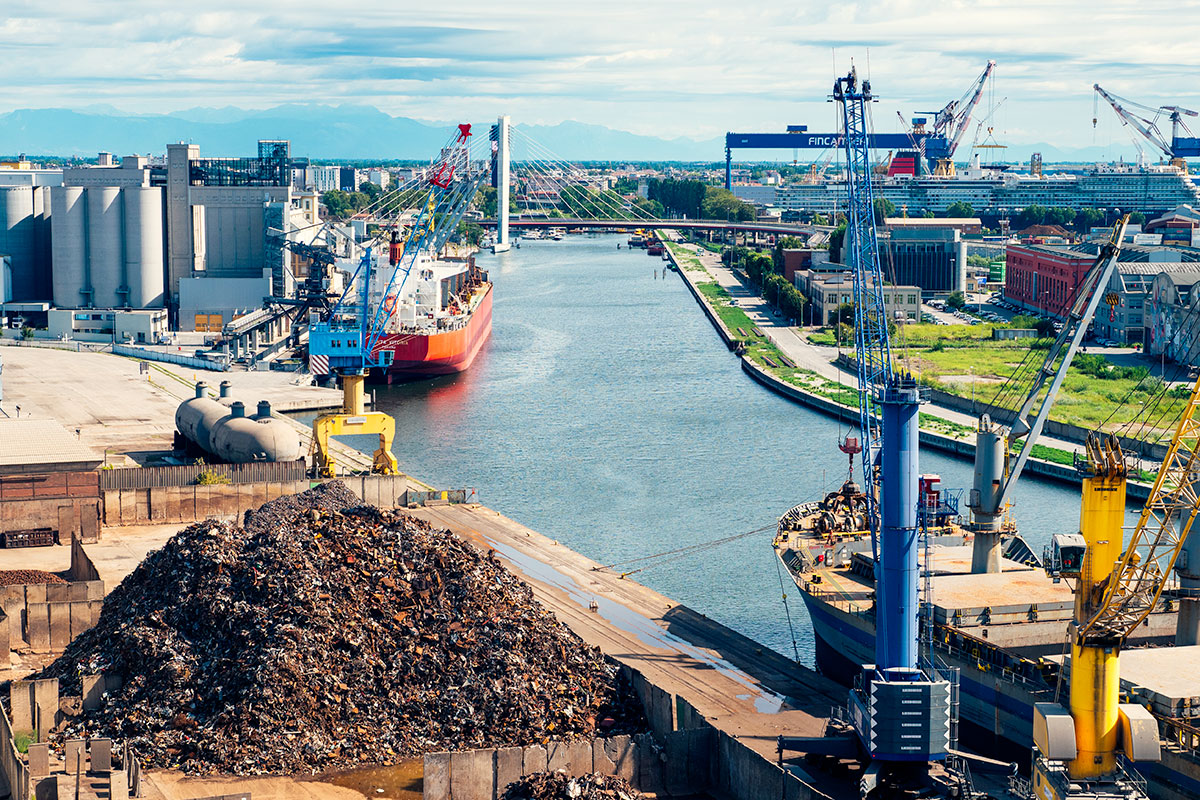
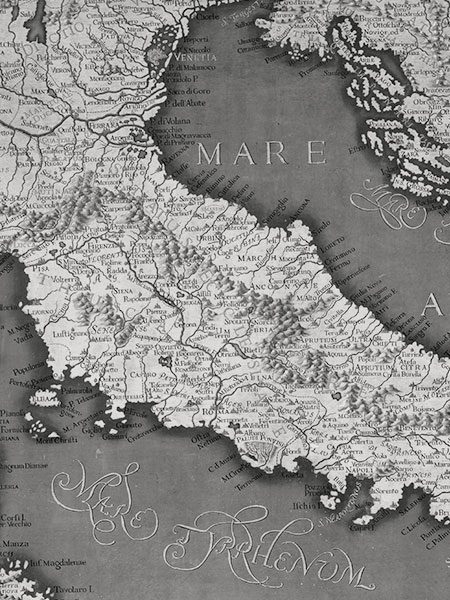
The Port of Venice can rely on a strategic position at the top of the Adriatic Sea, at the intersection of two European transport corridors, the Mediterranean and the Baltic-Adriatic, and it serves as a terminal for the Motorways of the Sea of the Eastern Mediterranean.

Port in Numbers

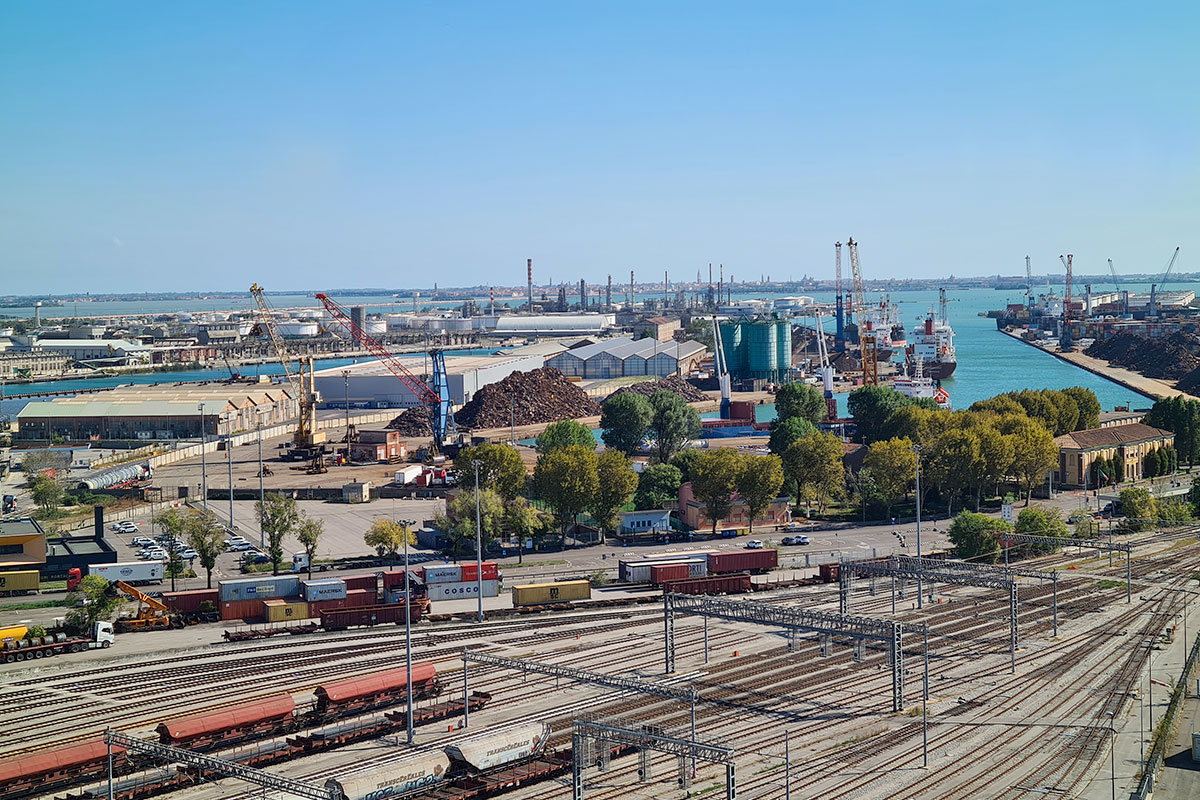
The Port of Venice covers a total area of over 2,045 hectares, which is equivalent to 5% of the entire city of Venice and 11% of the urbanized municipal territory.
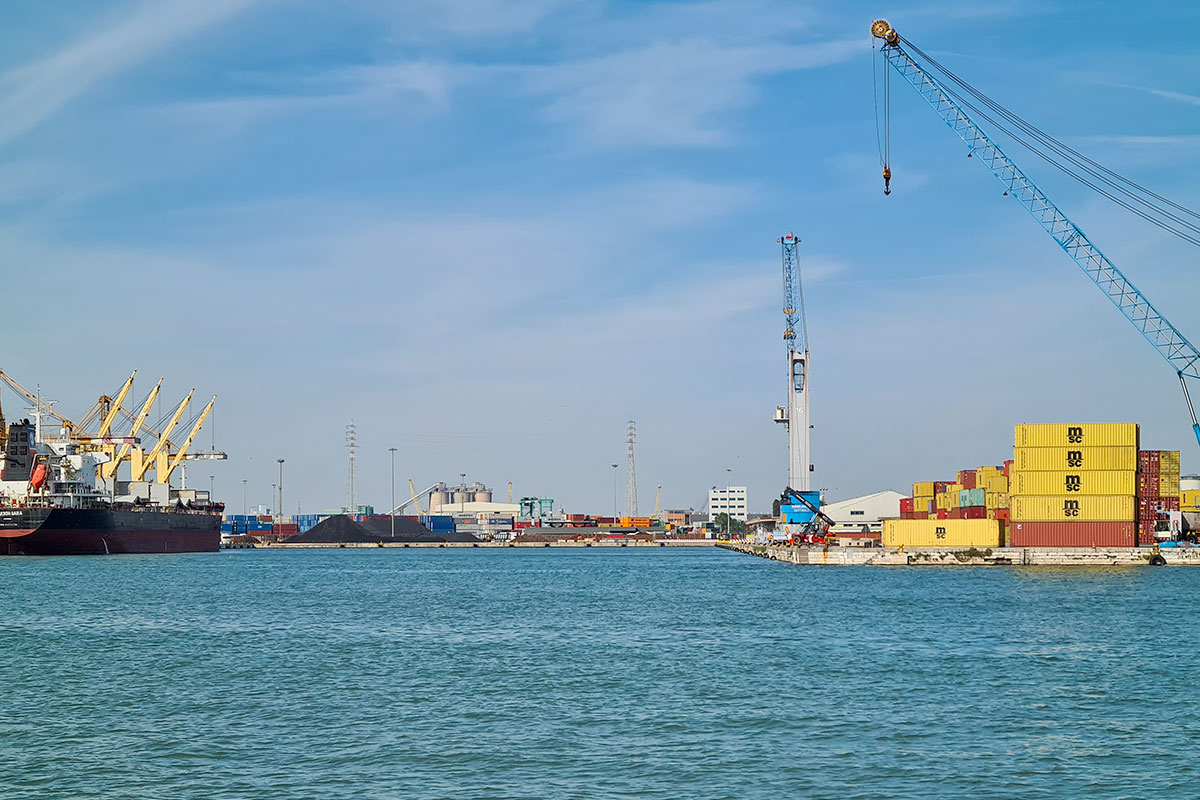
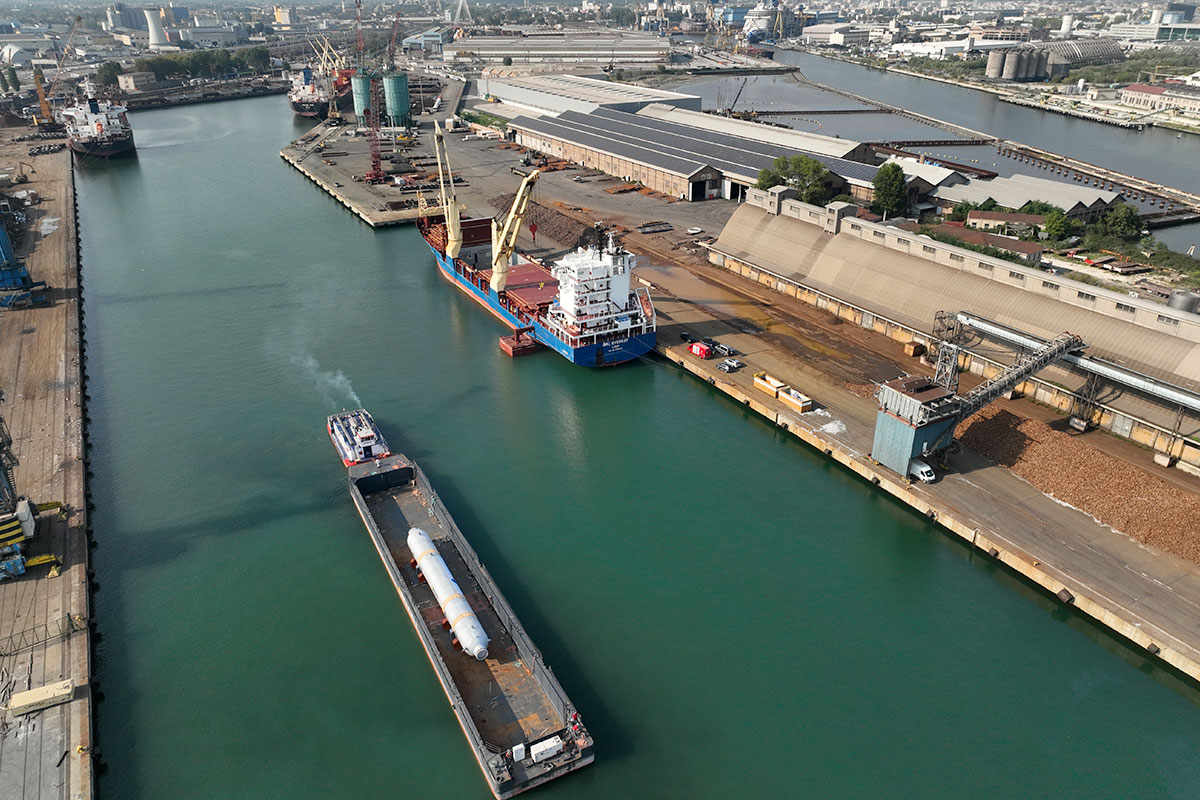
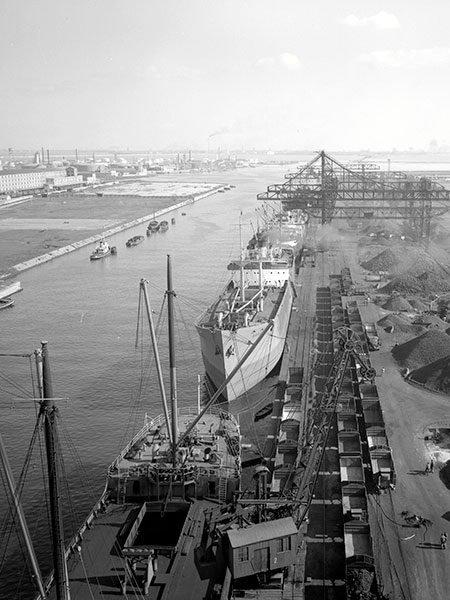
Inside the port, there are over 30 kilometers of quays, with 163 berths organized through 27 terminals, including commercial, industrial, and passenger terminals.

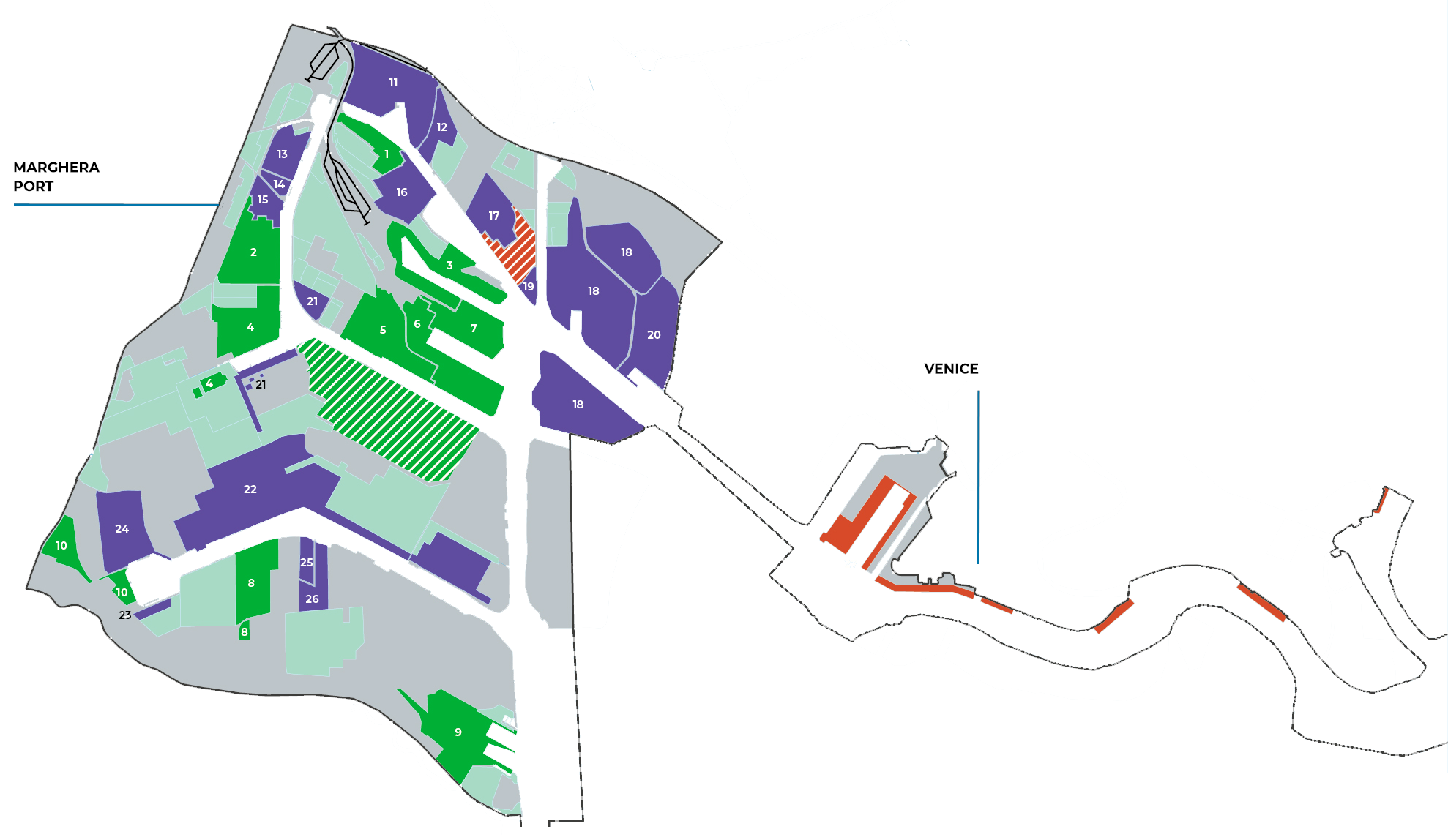
The port consists of two main areas:

the Porto Marghera area, where logistics, commercial, and industrial activities take place;

the Venice area, primarily developed in the Marittima area and smaller berths, where passenger activities for cruise ships, hydrofoils, and yachts are carried out.

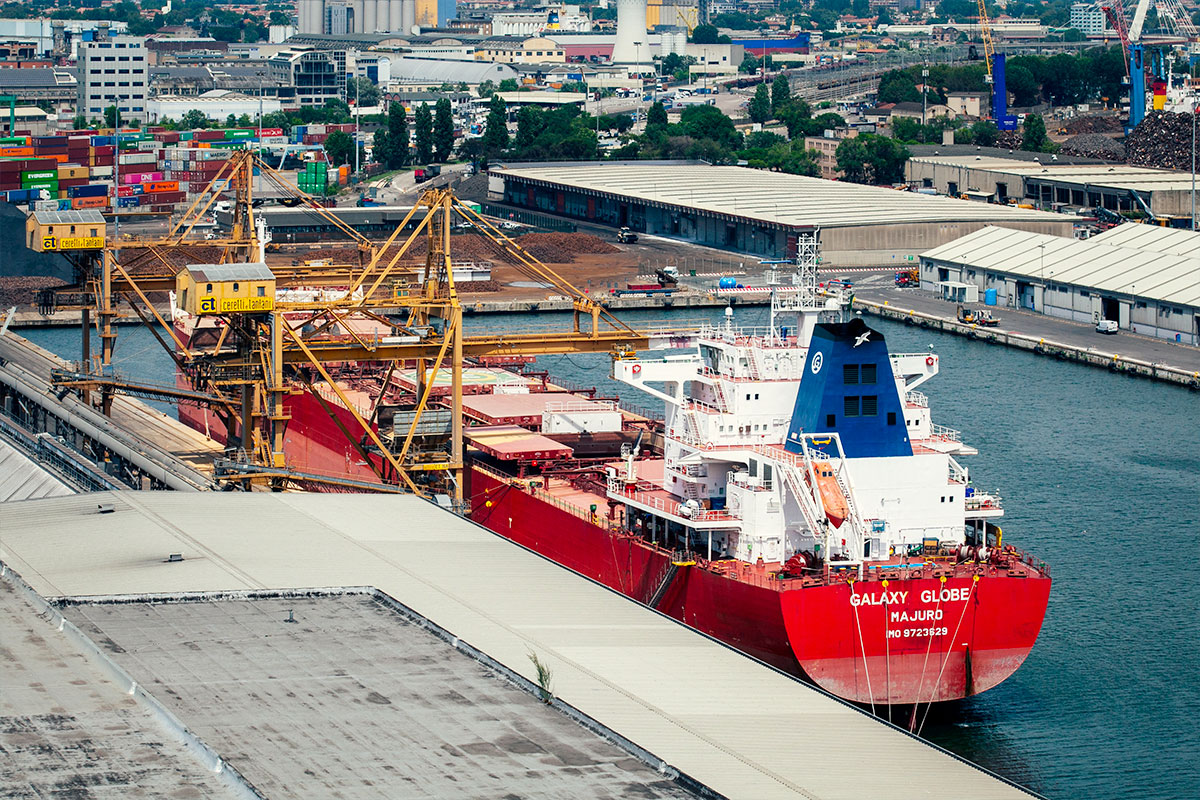
Porto Marghera covers over 1,447 hectares of industrial, commercial, and tertiary operational areas, with over 662 hectares of canals, basins, roadways, and railways. It is served by 12 kilometers of active quays accessible to ships with a draft of up to 11.5 meters. Inside the Porto Marghera area, there is a dense network of service infrastructure, including road connections (40 kilometers), railway tracks (over 135 kilometers), and optical fiber (7 kilometers).

The Venetian area, dedicated to passengers, extends over an area of over 26 hectares, including 4.73 hectares of covered areas and 12.37 hectares of water basins in the Marittima basin.

The Fusina ferry terminal covers 36 hectares and has 4 berths.

It is estimated that approximately 1,200 companies are directly employed in Venice, and when combined with the over 300 companies in Chioggia, there are a total of around 21,175 employees.
The companies involved with the Port of Venice generate an estimated direct production value of 6.6 billion euros, accounting for 27% of the municipal economy and 13% of the metropolitan economy.

The history of the Port of Venice

Discover the operators of the Port of Venice

1

Adriatic multimodal terminal

2

Interporto Rivers Venezia

3

FHP Terminal Venezia

4

FHP Venezia Transped

5

PSA Venice - Vecon

6

Euroports - Terminal Rinfuse Venezia

7

TIV - Terminal Intermodale Venezia

8

Decal

9

Venice Ro-Port Mos

10

San Marco Petroli

11

SIMAR - Società Metalli Marghera

12

Grandi Molini Italiani

13

Cereal Docks

14

Idromacchine

15

Acciaierie d'Italia

16

Pilkington Italia

17

Eni

18

Veneta Cementi

19

Veneta Cementi

20

IES - Italiana Energia e Servizi

21

IES – Italiana Energia e Servizi

22

VERSAILS

23

Colacem

24

General Sistem

25

General Sistem

26

SIAD

27

Venezia Terminal Passeggeri

Commercial Terminals

1. Adriatic multimodal terminal
2. Interporto Rivers Venezia
3. FHP Terminal Venezia
4. FHP Venezia Transped
5. PSA Venice – Vecon
6. Euroports – Terminal Rinfuse Venezia
7. TIV – Terminal Intermodale Venezia
8. Decal
9. Venice Ro-Port Mos
10. San Marco Petroli

Passenger Terminal

27. Venice Passenger Terminal

Industrial Terminals

11. Fincantieri
12. SIMAR – Società Metalli Marghera
13. Grandi Molini Italiani
14. Cereal Docks
15. Idromacchine
16. Acciaierie d’Italia
17. Pilkington Italia
18. ENI
19. Veneta Cementi
20. Petroven
21. IES – Italiana Energia e Servizi
22. VERSALIS
23. Colacem
24. Vezzini – Tencara
25. General Sistem
26. SIAD

  1. HOME
  2. ››
  3. Port Offer
  4. ››
  5. The Ports
  6. ››
  7. Port of Venice
Skip to content