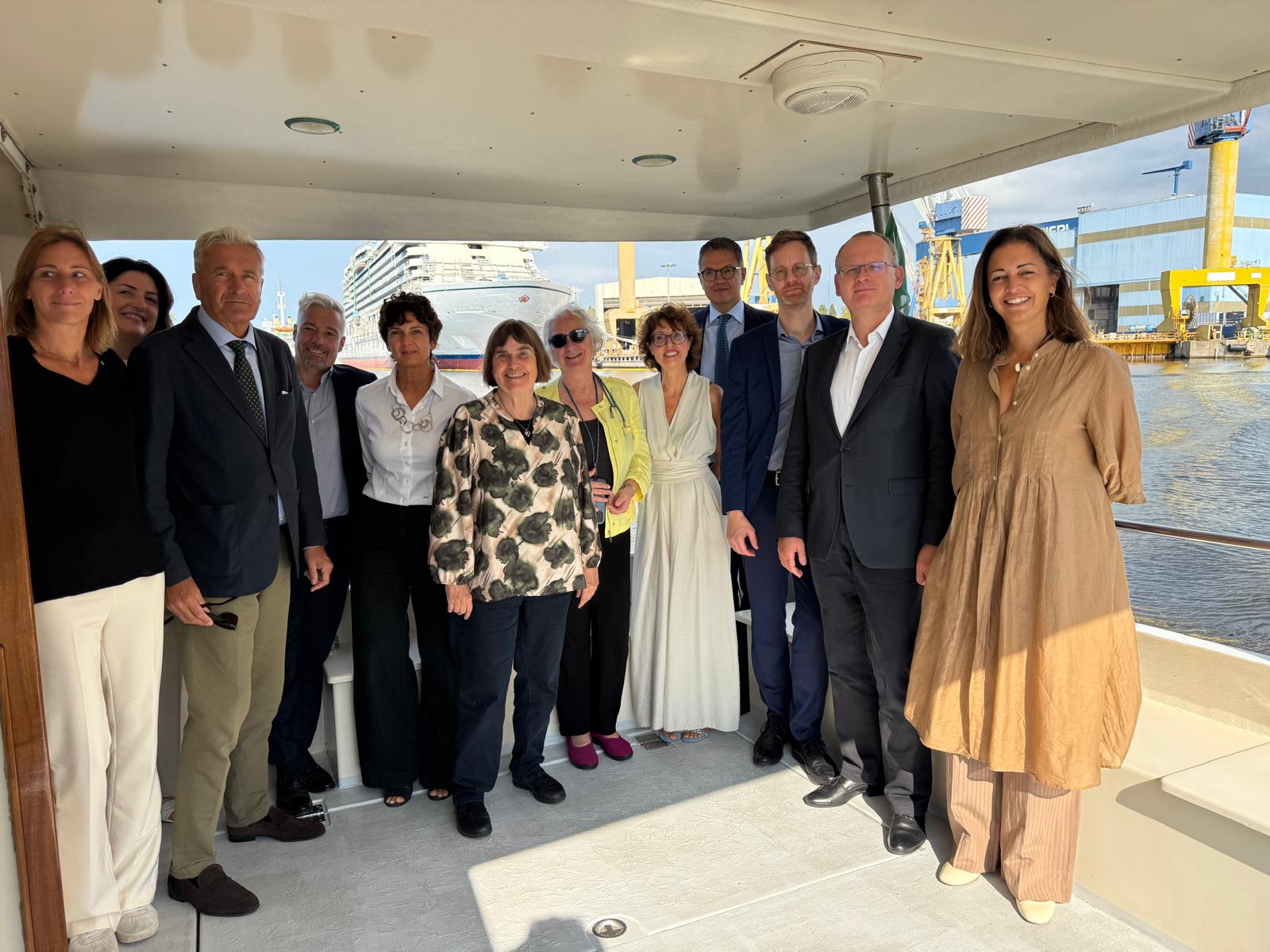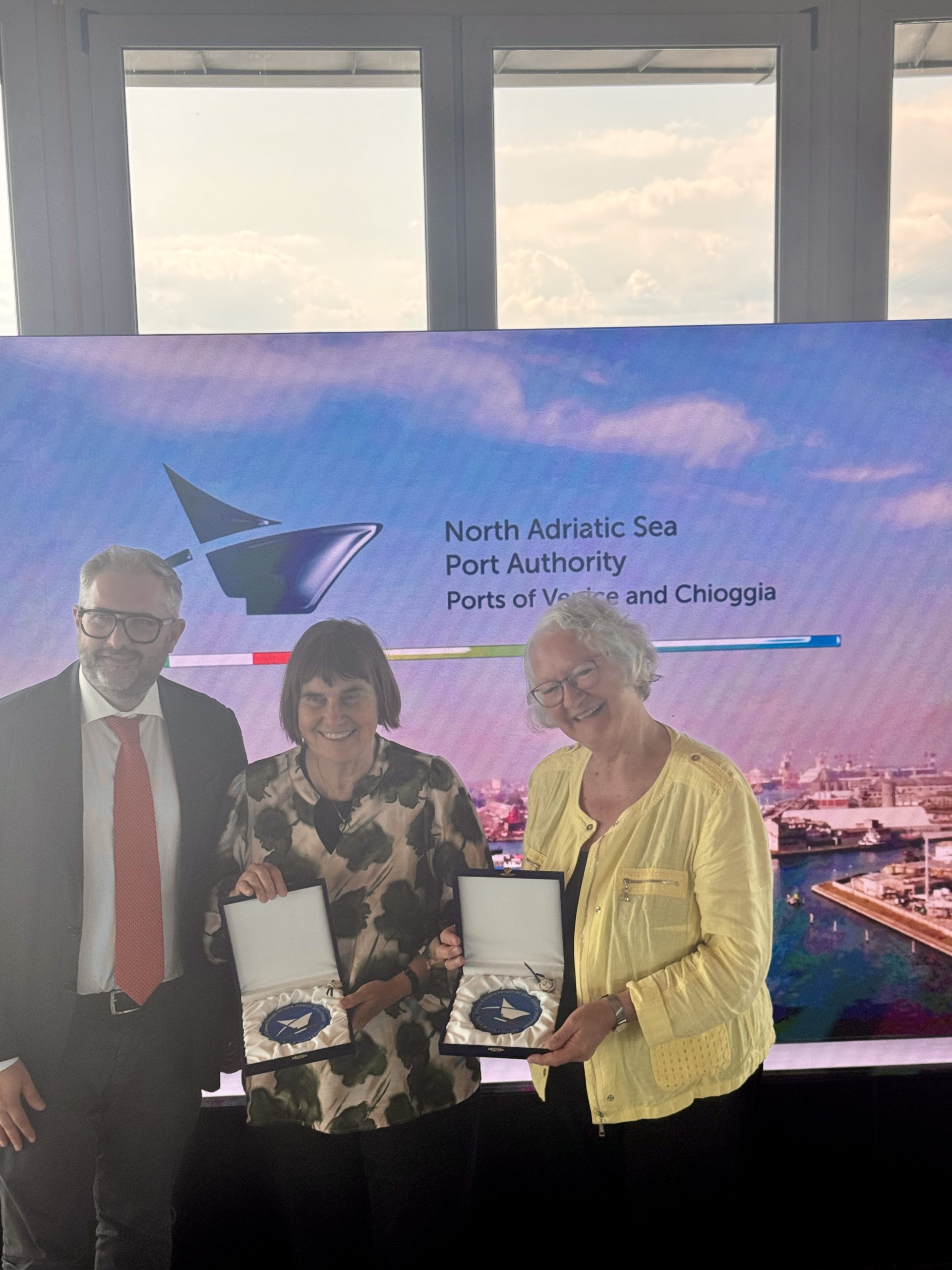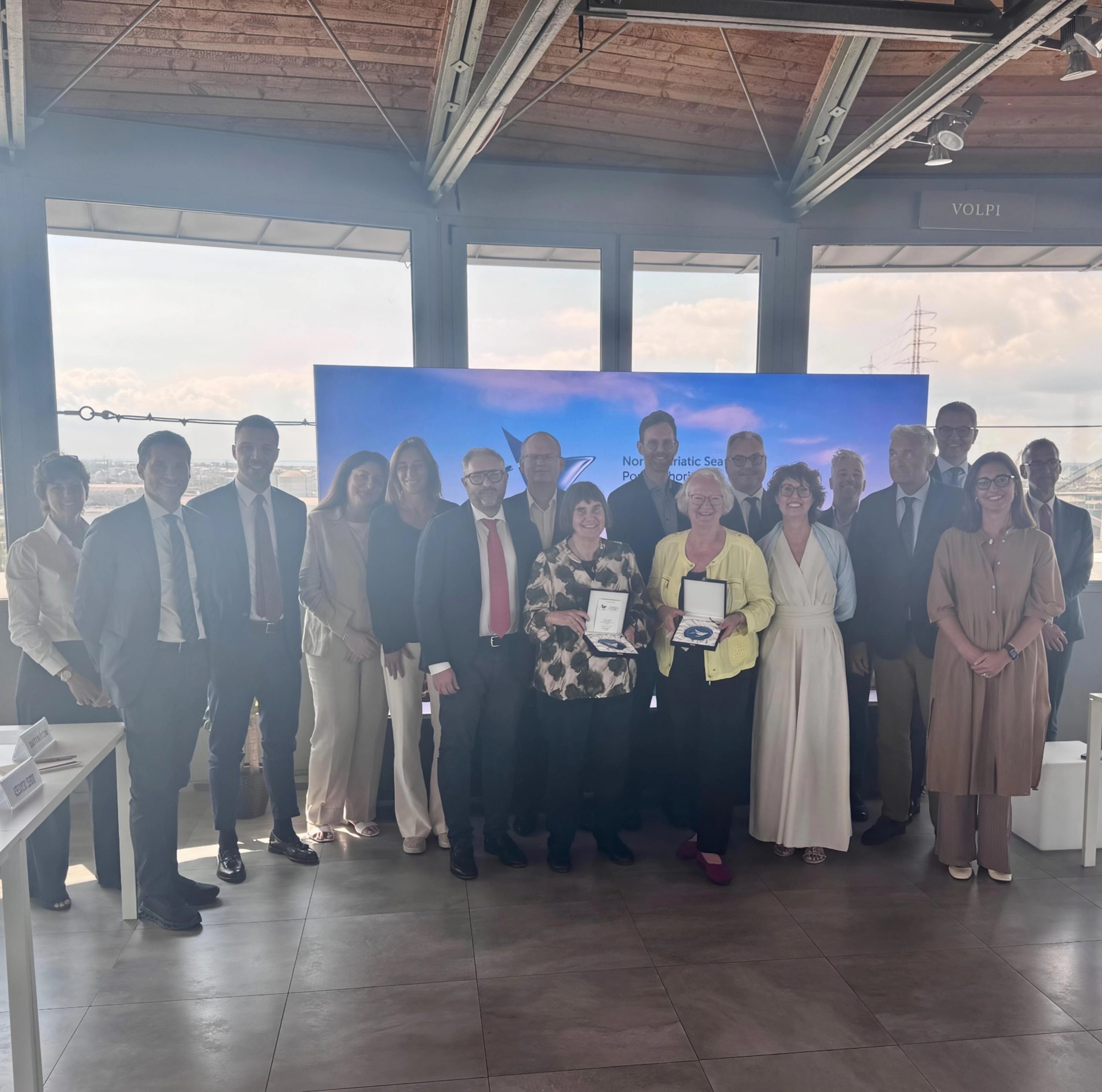

Venice, 15 September 2026 – The North Adriatic Sea Port Authority welcomed Mrs Gesine Meissner, European Coordinator for the European Maritime Space, and Mrs Anne Jensen, European Coordinator for the Baltic-Adriatic Corridor.
The visit provided an opportunity to discuss the strategic role of the Port of Venice within the European Union’s transport network and to explore prospects for further developing maritime, rail and intermodal connectivity.
During their visit, the two European Coordinators were given a first-hand look at some of the Port of Venice’s key infrastructure during a dedicated boat tour. They visited terminals and quays and gained insight into the logistics, intermodal and rail hubs that connect the port with major markets and key nodes of the Italian and European transport networks.
Venice marks the first stop in a wider programme that will also take the European Coordinators to the other Northern Adriatic ports that are members of NAPA, the North Adriatic Ports Association. Bringing together the leading ports in the region, NAPA provides a platform for cooperation aimed at strengthening the role of the Northern Adriatic as a gateway to the markets of Central and Northern Europe.
The visit comes at a particularly significant time, as preparations continue for the next programming period of the Central Europe Facility (CEF), the EU’s key funding instrument for strategic investment in transport infrastructure. CEF Transport supports the development of interconnected and multimodal TEN-T networks, with a particular focus on cross-border connections, bottlenecks and missing links.
“We are particularly pleased to have welcomed Mrs Gesine Meissner and Mrs Anne Jensen to Venice, and we thank them for their presence and for the attention they have devoted to our port system,” said Matteo Gasparato, President of the North Adriatic Sea Port Authority. “Their visit is an important opportunity to demonstrate the Port of Venice’s European significance and the extensive network of connections that makes it a port hub of continental importance. Veneto’s port system is directly integrated into two European transport corridors – the Baltic-Adriatic and Mediterranean Corridors – as well as the Motorways of the Sea. Its rail connections also link it to some of Italy’s and Europe’s most important intermodal freight terminals.”
“Our goal,” Gasparato continued, “is to further strengthen this position within the European transport network. Through Verona, Veneto’s port system can also connect to the Scandinavian-Mediterranean Corridor, further expanding its reach into European markets. With the progressive development of the Brenner railway connection and the continued strengthening of rail links, the port system will be able to overcome the Alpine barrier and compete increasingly effectively for access to European markets. This is a perspective that concerns not only Venice, but the wider Italian and European productive system.”
“We hope Europe will continue to pursue greater integration across logistics and transport modes, supporting increasingly efficient connections between ports, railways, intermodal freight terminals and manufacturing. For its part, the Port Authority will continue to pursue the path already set out: on the maritime side, by developing projects to improve nautical accessibility, expand the Motorways of the Sea and strengthen intra-Mediterranean connections – all key elements in supporting European and Italian production and competitiveness; and, on the other, by investing in projects that strengthen intermodality and make the integration between ports, intermodal freight terminals and the manufacturing sector increasingly efficient.
“It is through this network of connections that we can build a more competitive logistics system, fully integrated into the European maritime space.”